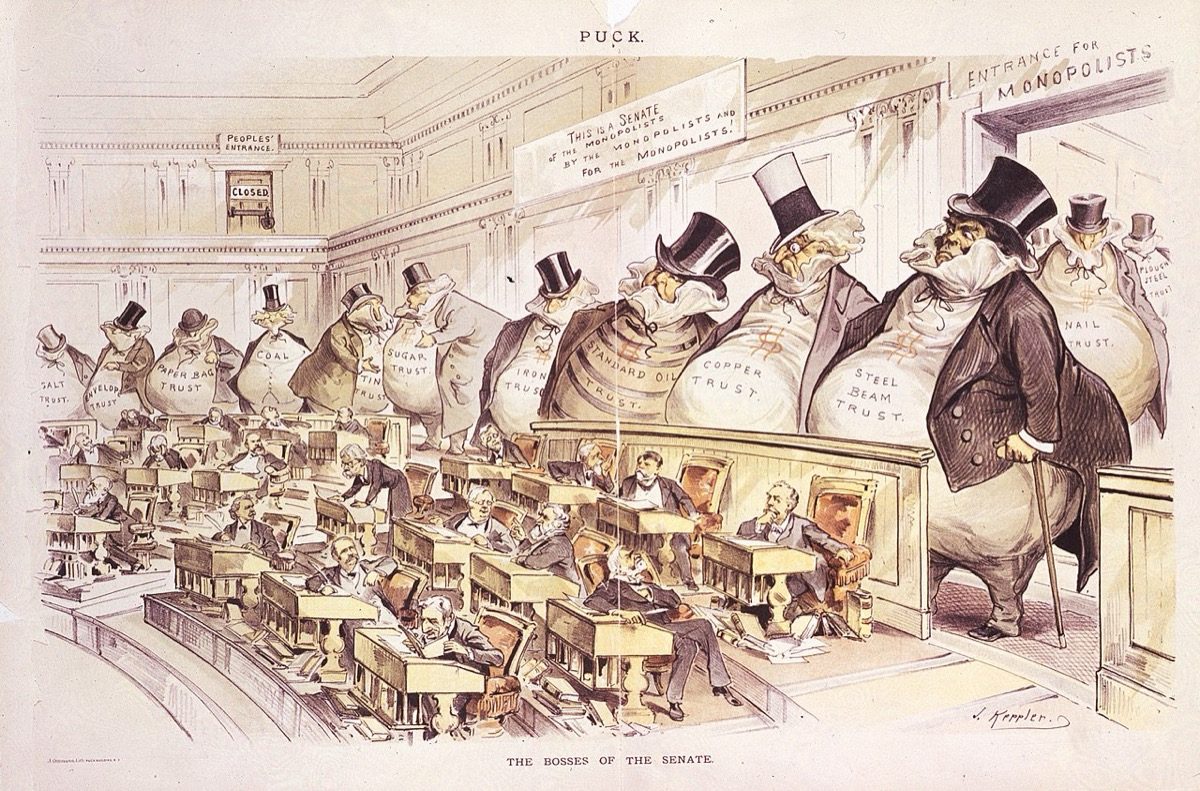



Federal Antitrust Defense — Sherman Act · Clayton Act · DOJ Enforcement
Federal antitrust enforcement — DOJ investigation and corporate documents
Confidential Intake · Antitrust Violations Defense Resource

Facing federal antitrust charges? Get a confidential case review

What should I know about federal antitrust charges?

Short Answer: Federal antitrust violations under the Sherman Act (15 U.S.C. §§ 1-2) carry severe penalties including up to 10 years in federal prison for individuals, fines up to $100 million for corporations, and treble damages in civil suits. The DOJ Antitrust Division actively prosecutes price-fixing, bid-rigging, market allocation, and monopolization schemes. An experienced federal antitrust defense attorney can evaluate your case and explain your legal options.

Tell us about your case and a federal defense specialist will call you back within 24 hours. Free, confidential, and no obligation.

Federal antitrust criminal charges under the Sherman Act

Federal antitrust prosecutions — price fixing, bid rigging, market allocation — carry severe penalties including prison time. These cases are built on economic evidence, cooperating witnesses, and corporate documents.

Per Se Versus Rule Of Reason

Not every agreement between competitors violates the Sherman Act. Per se violations are limited to hardcore cartel conduct — price fixing, bid rigging, market allocation. Other competitive conduct is judged under the rule of reason.

Per Se Versus Rule Of Reason

Agreement Requirement

Antitrust conspiracy requires proof of an actual agreement — not just parallel conduct, industry custom, or conscious parallelism. Mere price similarity in a competitive market does not establish a criminal agreement.

Agreement Requirement

Indictment Versus Civil Action

Most antitrust matters are civil, not criminal. Criminal antitrust charges are reserved for the most egregious per se violations. Understanding which track you are on shapes the entire defense strategy.

Indictment Versus Civil Action

Defense approaches for federal antitrust and white collar investigations

DOJ Antitrust Division investigations often involve grand jury subpoenas, dawn raids, and international coordination. A rapid, coordinated response is essential.

Leniency And Cooperation

The Antitrust Division's Leniency Program offers the first company or individual to self-report complete immunity. Understanding the timing, scope, and requirements of leniency applications is critical for clients who may qualify.

Leniency And Cooperation

Economic Expert Defense

Antitrust cases turn on market definition, competitive effects, and economic analysis. Retaining an economic expert early can challenge the government's market definition and show pro-competitive justifications for the challenged conduct.

Economic Expert Defense

International Coordination

Cross-border antitrust investigations involve multiple agencies — DOJ, European Commission, and others. Coordinating defense strategy across jurisdictions prevents inconsistent positions and protects against extradition risk.

International Coordination

Federal Criminal Defense — All Practice Areas

Federal criminal defense resources across the full spectrum of federal criminal charges.

⚖

Federal Criminal Defense — Every Federal Charge

This defense resource covers antitrust violations cases alongside a full range of federal practice areas — RICO, money laundering, wire fraud, public corruption, antitrust, crypto fraud, and federal appeals.

View All Federal Practice Areas →

Federal criminal law — analysis, updates, and defense insights

Regular dispatches on federal sentencing changes, circuit court decisions, DOJ enforcement priorities, and defense strategy.

Update

West Monroe Woman, Her Family Members, and Their Associates Indicted for Wire Fraud, Money Laundering, and Arson Conspiracy Involving 13 Residential Fires - Department of Justice (.gov) | Orchestra Legal

Wire fraud is the backbone of most white-collar prosecutions. Under 18 U.S.C. § 1343, the government must prove a scheme to defraud, intent to defraud, and the

October 05, 2026
Cartel Allegations: Legal Frameworks and Defense Strategies in Antitrust Law | Antitrust Defense Guide
Analysis

Cartel Allegations: Legal Frameworks and Defense Strategies in Antitrust Law | Antitrust Defense Guide

Cartel Conduct and the Sherman Act Cartel allegations under U.S. antitrust law are primarily governed by the Sherman Act (15 U.S.C. §§ 1-2), which prohibits…

October 04, 2026
Update

Venezuela: Former Minister Saab Pleads Guilty to Money Laundering, to Cooperate With US Authorities - Venezuelanalysis | Orchestra Legal

The recent guilty plea of Alex Saab, a former Venezuelan minister and close associate of President Nicolás Maduro, to a money laundering conspiracy charge marks

September 19, 2026
Cartel Allegations: Per Se Violations, Evidentiary Standards, and Defense Architecture | Antitrust Defense Guide
Analysis

Cartel Allegations: Per Se Violations, Evidentiary Standards, and Defense Architecture | Antitrust Defense Guide

The Statutory Architecture of Cartel Charges Cartel allegations in federal antitrust enforcement arise primarily under Section 1 of the Sherman Act, 15 U.S.C.…

September 16, 2026
Update

Wisconsin Man Sentenced to 8 Years in Federal Prison for $14.25 Million Wire Fraud and Money Laundering Scheme - Iowa Insurance Division (.gov) | Orchestra Legal

18 U.S.C. § 1343 : Wire fraud carries a statutory maximum of 30 years in prison and a fine of up to $1 million. The actual sentence depends on the amount of los

September 15, 2026
Merger Investigations Under Antitrust Law | Antitrust Defense Guide
Analysis

Merger Investigations Under Antitrust Law | Antitrust Defense Guide

Mission and Scope of Antitrust Defense Guide The mission of the Antitrust Defense Guide is to provide deep niche authority on antitrust defense, merger…

September 11, 2026

Authoritative legal information — bar associations, court records, and research tools

Curated links to official legal resources, professional organizations, and public-access legal databases.

GOOOOGLE — Bury Negative Search Results

GOOOOGLE publishes positive, controlled content across a network of authoritative domains — pushing negative search results off page one. 12,400+ clients served. 184,000 articles published. 47,300 negative results buried.

Clean Slate →
About 1,240,000 results (0.42 seconds)
GOOGLE
1 2 3 4 5 6

Ready to talk about your case?

Complete the confidential intake form and a federal defense specialist will call you back within 24 hours. Free, no obligation.

Request a Call Back →

Legal Disclaimer: This site provides general information and a confidential case-intake service. Submitting information does not create an attorney-client relationship, and no attorney-client relationship is formed by using this site. Your information may be shared with licensed federal criminal defense attorneys. Every case is different — consult directly with a qualified attorney about your specific situation. Prior results do not guarantee similar outcomes.

⚖ Licensed Counsel
🏆 24-Hour Callback
📍 Local Case Intake
📰 Private & Confidential
👤 No Obligation
✓ Free Case Review

Antitrust defense research and attorney matching

About this site: this resource explains federal antitrust defense, investigation steps, penalties, and attorney selection so readers can understand the site purpose immediately.

Recent Briefs & Analysis

Legal briefs, case analysis, and practice notes — updated regularly.

Current Term Developments

Notable rulings and their implications for federal defense practice.

Practice Advisory

Key procedural updates affecting federal criminal defense strategy.

Circuit Split Watch

Monitoring divergent rulings across the federal circuits.

Frequently Asked Questions

What is an antitrust investigation?

An antitrust investigation examines suspected anticompetitive conduct such as price-fixing, bid-rigging, market allocation, or monopolization. Federal enforcement is led by the DOJ Antitrust Division and the FTC.

What does a criminal defense attorney do?

A criminal defense attorney investigates the charges, challenges the prosecution's evidence, negotiates with prosecutors, and represents the client at trial. Early involvement of counsel often improves outcomes.